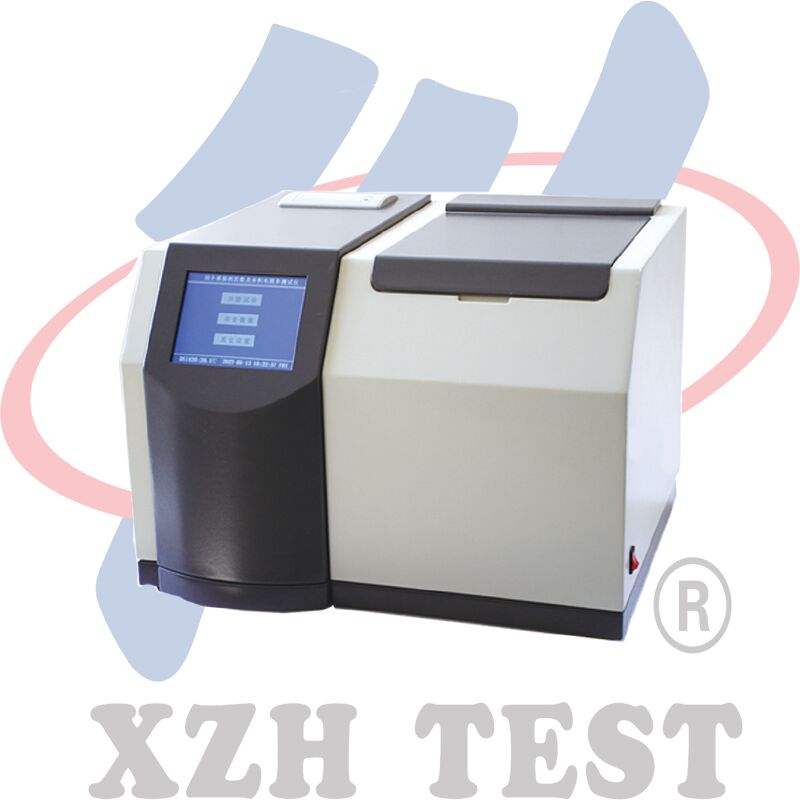
XHYS101
Insulating Oil Dielectric Loss Tester specializes in testing three key parameters of insulating liquids in power equipment: dielectric loss value, permittivity, and volume resistivity. Equipped with single-chip microcomputer technology, it enables fully automated processes covering heating, temperature regulation, data collection, computation, result visualization, printing, and data retention.
Performance Characteristics:
(1) The oil cup adopts a three-electrode structure conforming to the national standard GB/T5654-2007, with an electrode spacing of 2mm, which eliminates the influence of stray capacitance and leakage on the dielectric loss test results.
(2) The instrument uses medium-frequency induction heating and a PID temperature control algorithm. This heating method has the advantages of non-contact between the oil cup and the heating element, uniform heating, fast speed, and convenient control, ensuring that the temperature is strictly controlled within the preset temperature error range.
(3) The internal standard capacitor is an SF6 gas-filled three-electrode capacitor. The dielectric loss and capacitance of this capacitor are not affected by ambient temperature and humidity, ensuring the accuracy of the instrument even after long-term use.
(4) Comprehensive protection functions. In case of overvoltage, overcurrent, or high-voltage short circuit, the instrument can quickly cut off the high voltage and issue a warning message. A warning message is also issued if the temperature sensor fails or is not connected.
A temperature limiting relay is installed in the medium-frequency induction heating furnace. When the temperature exceeds 120 degrees Celsius, the relay releases, and heating stops.
(5) Convenient test parameter settings. Temperature setting range: 40~120℃, AC voltage setting range:
200~2200V, DC voltage setting range: 0~500V.
(6) Uses a large-screen TFT full-color LCD touch display for clear display. With simple settings, the instrument can automatically perform tests and automatically store and print test results.
(7) Built-in real-time clock; test date and time can be saved, displayed, and printed along with the test results.
(8) Empty electrode cup calibration function. Measures the capacitance and dielectric loss factor of the empty electrode cup to determine the cleaning and assembly status of the empty electrode cup. Calibration data is automatically saved to facilitate accurate calculation of relative permittivity and DC resistivity.
(9) The instrument is based on the RAM9 platform, providing high test accuracy and speed.

Application Areas:
♦ Power systems: power generation, transmission, transformation, and distribution;
♦ Factories and mines: large-scale manufacturing plants and various mining companies;
♦ Metallurgy and petrochemicals: smelting, chemical industry, water treatment, etc.;
♦ Transportation: ports/railways/highways/airports and municipal street lighting, etc.;
♦ Enterprises and institutions: logistics departments of large enterprises and institutions;
♦ Construction industry: large construction and property management companies;
♦ Power equipment installation and testing: power installation and commissioning companies of various levels;


 Your message must be between 20-3,000 characters!
 english
 français
 Deutsch
 Italiano
 Русский
 Español
 português
 Nederlandse
 ελληνικά
 日本語
日本語
 한국
한국
 العربية
 हिन्दी
 Türkçe
 indonesia
 tiếng Việt
 ไทย
ไทย
 বাংলা
বাংলা
 فارسی
فارسی
 polski