logo
Home > Products >
Transformer Tester
>
Insulated Oil Gas Chromatograph Transformer Insulation Oil Tester| XHSP1700

Insulated Oil Gas Chromatograph Transformer Insulation Oil Tester| XHSP1700

Product Details:
Place of Origin: China
Brand Name: XZH Test
Certification: CE/ISO
Model Number: XHSP1700
Detail Information
Place of Origin:
China
Brand Name:
XZH Test
Certification:
CE/ISO
Model Number:
XHSP1700
Model NO.:
XHSP1700
Customized:
Customized
Color:
Black
Transport Package:
Wooden Box Filled With Foam Inside
Trademark:
XHSP1700
Origin:
China Xi′an
Supply Ability:
1000pieces/Year
Customization:
Available
After-sales Service:
Warranty Certificate
Warranty:
12 Months
Highlight:

High Light

Highlight:

Three-Detector FID and TCD DGA

,

6-Channel 0.1 C Temperature Control

,

Network Remote Diagnosis 253 Units

Trading Information
Minimum Order Quantity:
1unit
Price:
Negotiable
Packaging Details:
wooden box
Delivery Time:
5-8work days
Payment Terms:
T/T
Supply Ability:
2000unit/year
Product Description
Target Application: Engineered for power utility DGA (Dissolved Gas Analysis) laboratories, transformer condition assessment centers, and oil-filled electrical equipment manufacturers (transformer factories, bushing plants, HV porcelain factories) requiring high-precision chromatographic separation of fault-indicating dissolved gases. Distinct from portable field analyzers, the XHSP1700 provides laboratory-grade three-detector simultaneous detection with networked multi-instrument (253-unit) management for fleet-scale transformer health diagnostics.
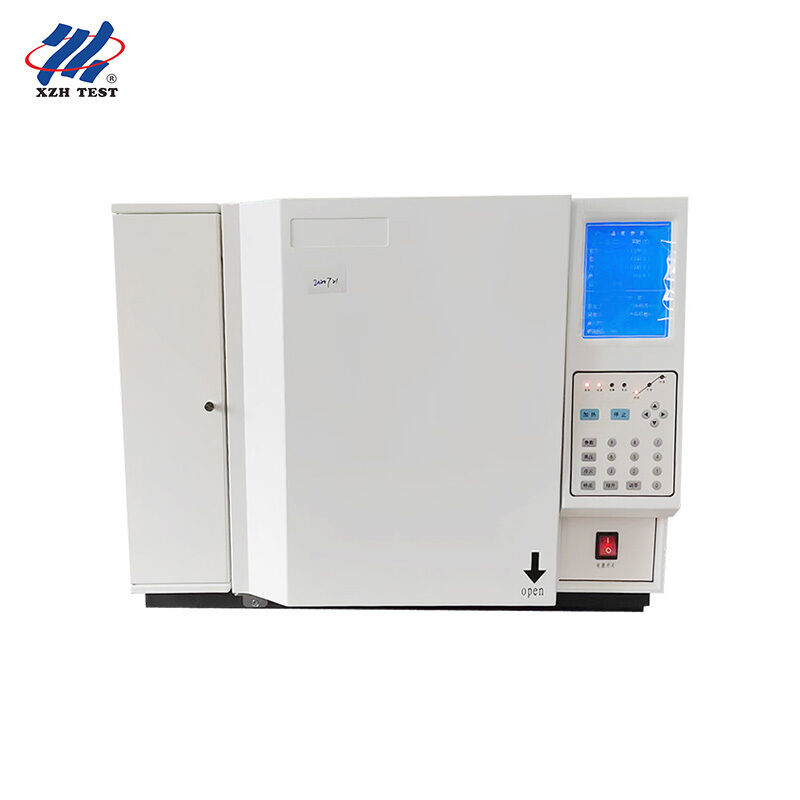
XHSP1700 Insulated Oil Gas Chromatograph

The XHSP1700 Insulated Oil Gas Chromatograph adopts a three-detector process with one injection, two parallel columns, and one split configuration. In detection sensitivity, chromatographic peak resolution, and quantitative accuracy, it surpasses national and industry standard requirements. Connected to a network-type dedicated chromatography workstation, it serves oil-filled electrical equipment manufacturers and utility companies — delivering the best performance, most convenient operation, and most sensitive detection for transformer dissolved gas analysis (DGA).

Dissolved gas analysis is the single most important diagnostic tool for transformer condition assessment. By identifying and quantifying dissolved fault gases — hydrogen (H2), acetylene (C2H2), ethylene (C2H4), ethane (C2H6), methane (CH4), carbon monoxide (CO), and carbon dioxide (CO2) — the XHSP1700 enables precise classification of thermal faults, partial discharge, and arcing conditions according to IEC 60599 and IEEE C57.104 interpretation standards.

XHSP1700

Key Features
  • Three-Detector Simultaneous Detection: Supports FID (Flame Ionization Detector), TCD (Thermal Conductivity Detector), and up to three detectors installed simultaneously — enabling complete dissolved gas profiling in a single injection run.
  • Ethernet Remote Management: 10/100M adaptive Ethernet with built-in IP stack enables long-distance data transmission via enterprise LAN and Internet. Supports up to 253 chromatographs on a single network workstation with real-time monitoring, reverse control, and centralized data management.
  • 6-Channel Precision Temperature Control: Six completely independent temperature control zones from 8C above ambient to 450C with 0.1C accuracy and 16-step programmable heating — delivering the thermal stability required for reproducible DGA retention times.
  • 24-Bit AD Signal Processing: Low-noise, high-resolution 24-bit analog-to-digital conversion with baseline storage and baseline subtraction functions — ensuring reliable peak integration even for trace-level gas concentrations.
  • Multi-Processor Parallel Architecture: Dedicated processors for temperature control, data acquisition, and communication ensure stable operation under complex multi-detector configurations — with automatic fault diagnosis and power-failure data protection.
  • Chinese/English Dual Operating System: 5.7-inch color LCD display with keyboard and computer dual-control options, supporting free language switching and detector auto-identification for simplified operator workflows.
  • Modular Design: Modular structure enables easy detector replacement and future upgrades — protecting laboratory investment while accommodating evolving analytical requirements.
Technical Specifications
Temperature Control 6 Channels, 8C ~ 450C above ambient, 1C increment, 0.1C accuracy
Programmed Heating 16 Steps, Rise Rate 0.1~39C/min (Normal) / 0.1~80C/min (High-Speed)
Detectors FID, TCD; Up to 3 Simultaneously
Injector Types Packed Column, Capillary, Six-Port Valve Gas, Auto Headspace (Optional)
Gas Control Mechanical Valve / Electronic Flow Pressure Control (Optional)
Communication Ethernet IEEE802.3, Remote Diagnosis and Program Update
Network Capacity 253 Chromatographs per Workstation
Display 5.7-inch Color LCD
External Events 4 Channels; Auxiliary Control Output 4 Channels
Frequently Asked Questions
Q1: Why is dissolved gas analysis essential for transformer condition assessment?
Dissolved Gas Analysis (DGA) is widely regarded as the most effective non-intrusive diagnostic method for detecting incipient faults in oil-filled transformers. Different fault types generate characteristic gas patterns: partial discharge produces primarily hydrogen (H2); thermal faults (overheating) produce ethylene (C2H4) and methane (CH4); arcing produces acetylene (C2H2). The XHSP1700's three-detector configuration with FID and TCD simultaneously quantifies all key fault gases in a single injection, enabling accurate fault type identification according to IEC 60599 and IEEE C57.104 interpretation methods — often months before a fault would be detectable by electrical testing alone.
Q2: How does the networked workstation architecture benefit multi-site laboratories?
The XHSP1700's Ethernet-based network architecture supports up to 253 chromatographs on a single workstation, enabling: (1) Centralized data management — all DGA results archived in one database for fleet-wide transformer condition trending; (2) Remote monitoring — unit supervisors and senior management can observe instrument operation and analysis results in real-time from any location; (3) Remote diagnosis — manufacturer engineers can connect via Internet (with user permission) to diagnose issues and update firmware; (4) Cost efficiency — a single PC-based workstation manages multiple instruments, minimizing per-instrument IT investment. The three-tier connection design (local, unit supervisor, superior supervisor) supports the organizational hierarchy of provincial and regional power utilities.
Q3: What makes the 6-channel temperature control critical for reproducible DGA?
Chromatographic separation of dissolved gases relies on precise, reproducible column temperature profiles. Each of the six independent temperature control channels can be programmed with up to 16 heating steps from 8C above ambient to 450C at 0.1C accuracy. This multi-zone, multi-ramp capability enables: (1) Optimized separation of co-eluting gas pairs (e.g., ethylene/ethane) through carefully controlled temperature ramps; (2) Rapid column cooling via the automatic back door system for faster cycle times between injections; (3) Simultaneous operation of multiple columns and detectors at different optimal temperatures — critical when using both packed and capillary columns in the same three-detector parallel configuration. The 0.1C precision ensures retention time reproducibility within 0.5% RSD across hundreds of sequential injections.
Q4: What sample introduction methods are supported?
The XHSP1700 supports four injector types: (1) Packed column injection — standard method for routine DGA using headspace gas extraction from oil samples; (2) Capillary injection — for high-resolution separation when analyzing complex oil matrices or research applications; (3) Six-port valve gas injection — automated gas sampling with excellent repeatability for high-throughput DGA laboratories; (4) Automatic headspace injection (optional) — fully automated oil-to-gas extraction and injection, minimizing operator handling and improving reproducibility. The instrument also features a timing self-starting program for unattended online gas analysis when paired with automatic sampling components.
Q5: How does the 24-bit AD and baseline management ensure trace-level gas detection?
Early-stage transformer faults produce dissolved gases at very low concentrations — often single-digit ppm levels for hydrogen and acetylene. The XHSP1700's 24-bit analog-to-digital converter provides 16.7 million discrete signal levels compared to 65,536 levels in a traditional 16-bit system — a 256x improvement in resolution. Combined with baseline storage and subtraction functions, this enables reliable peak integration even when the analyte peak is only marginally above the baseline noise. The instrument stores multiple baseline profiles for different column/detector configurations, automatically applying the appropriate subtraction to each analysis. This noise reduction capability is particularly valuable for detecting trace acetylene (the primary arcing indicator) at concentrations below 1 ppm.