Model Comparison
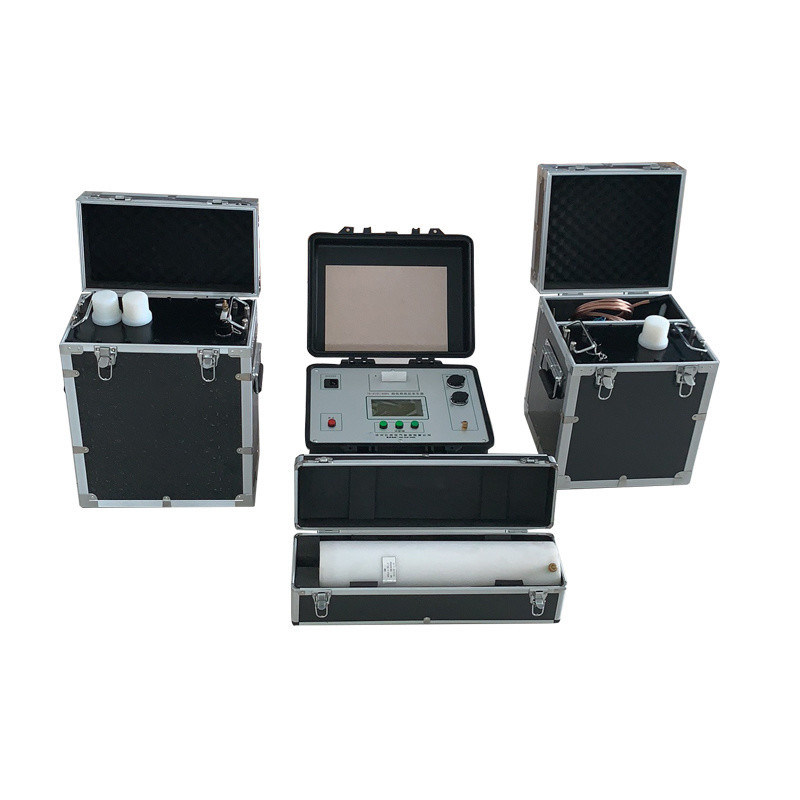
30kV 50kV 80kV VLF Hipot Tester Range Cable Class and Booster Structure
Three ratings, three cable classes, one controller platform. The differences that matter are the peak voltage, the cable class each rating is built for, and whether the set carries one booster or two.
30 / 50 / 80 kV peak
10 / 15 / 35 kV cable
Single vs two boosters
Common controller
Only three things change
Between the 30 kV, 50 kV and 80 kV XHDP ratings, three things differ: the peak output voltage, the cable class each is built for, and whether the set uses one booster or two in series. Everything else - controller, frequencies, accuracy, protection logic - is common to the series. That makes the comparison simpler than a full specification table suggests.
Side by side
| XHDP-30 | XHDP-50 | XHDP-80 |
|---|
| Rated output | 30 kV peak | 50 kV peak | 80 kV peak |
| Typical cable class | 10 kV | 15 kV | 25 – 35 kV |
| Booster structure | Single | Single | Two, in series |
| Load at 0.1 / 0.05 / 0.02 Hz | ≤ 1.1 µF / ≤ 2.2 µF / ≤ 5.5 µF on all three ratings |
| Built for | Distribution feeders, small machines | 15 kV class cable and machines | Transmission class feeders |
What does not change
The controller is the same unit across all three. The three fixed frequencies, the load ladder, the 3 % measurement accuracy, the waveform distortion within 5 % and the protection logic are series-wide constants. So the question is not which one is better made - it is which one reaches your test voltages without carrying capability you never use.
What changes, and why it matters on site
The booster is the item that decides how the set travels. On the 30 kV and 50 kV ratings it is a single unit one person can carry; on the 80 kV rating it becomes two units in series, which usually means a different loading routine and a different way of moving it around a substation. The voltage range is the difference you notice once a quarter, when a job outside the usual class appears - and on that day, the alternative to owning the right rating is hiring one or refusing the job.
When 30 kV is enough
If the list is 10 kV distribution cable, small motors and short runs, the 30 kV rating covers it and is the lightest option in the range. Buying 80 kV for that work adds a second booster to every site visit and buys capability that never gets used.
When 50 kV is the middle that fits
15 kV class cable and machines sit inside the 50 kV rating, which is still a single-booster set and covers the bulk of routine distribution maintenance. Many test departments stop here because their procedure never asks for more.
When 80 kV is the right answer
35 kV class cable in the routine list is the usual trigger, along with departments that must cover several classes from one purchase and would rather own one set than justify two. If the requirement is capacitance rather than voltage - long runs, several microfarads per phase - an automatic frequency sweep model is the better fit than any fixed-frequency rating, because it sweeps down to 0.01 Hz instead of asking for a bigger source.
Data we confirm per model
Weight of the controller and each booster, supply fuse rating and protection response time are configuration-specific and are stated in the technical documentation for the model you order. We confirm them in writing with the quotation rather than publishing one figure for a whole family of instruments - send us the models you are comparing and we will put the numbers side by side for you.
Frequently asked questions
What actually differs between the 30, 50 and 80 kV models?
Three things: the peak output voltage, the cable class the rating is built for, and the booster structure. The 30 kV and 50 kV models use one booster; the 80 kV model uses two boosters in series. Controller, frequencies, accuracy and protection logic are common to all three.
Is the load capability the same on all three ratings?
Yes. Every rating carries 1.1 uF at 0.1 Hz, 2.2 uF at 0.05 Hz and 5.5 uF at 0.02 Hz. When a specimen exceeds the 0.1 Hz limit, the test is run at the lower frequency rather than with a larger source.
Can a 30 kV model test a 35 kV cable?
No. The 35 kV cable class is covered by the 80 kV model. The 30 kV model is matched to 10 kV cable, the 50 kV model to 15 kV cable and the 80 kV model to the 25-35 kV range.
Do I need a different controller for each rating?
No. The same 4 kg controller runs any rating in the series. Only the booster changes with the voltage class, so a second rating can be added by buying a booster rather than a complete set.
Which rating fits your list?Send the cable classes and the capacitance per phase, and we will tell you whether one rating covers the list or whether a second booster is the cheaper route.


 Your message must be between 20-3,000 characters!
 english
 français
 Deutsch
 Italiano
 Русский
 Español
 português
 Nederlandse
 ελληνικά
 日本語
 한국
 العربية
 हिन्दी
 Türkçe
 indonesia
 tiếng Việt
 ไทย
 বাংলা
 فارسی
 polski

Overall Rating
Rating Snapshot
The following is the distribution of all ratingsAll Reviews